
Av: Sara Ölander
English version can be found below.
Hej på er! PUSH Sverige har varit i Bonn på SB58-konferensen och har nu kommit hem till Sverige igen. Jag (Sara, internationell koordinator) var på plats både vecka ett och två men fick sällskap av vår ordförande Daniella under andra veckan. Då detta var vår första SB-session har det varit mycket nytt – men som vi har lärt oss!
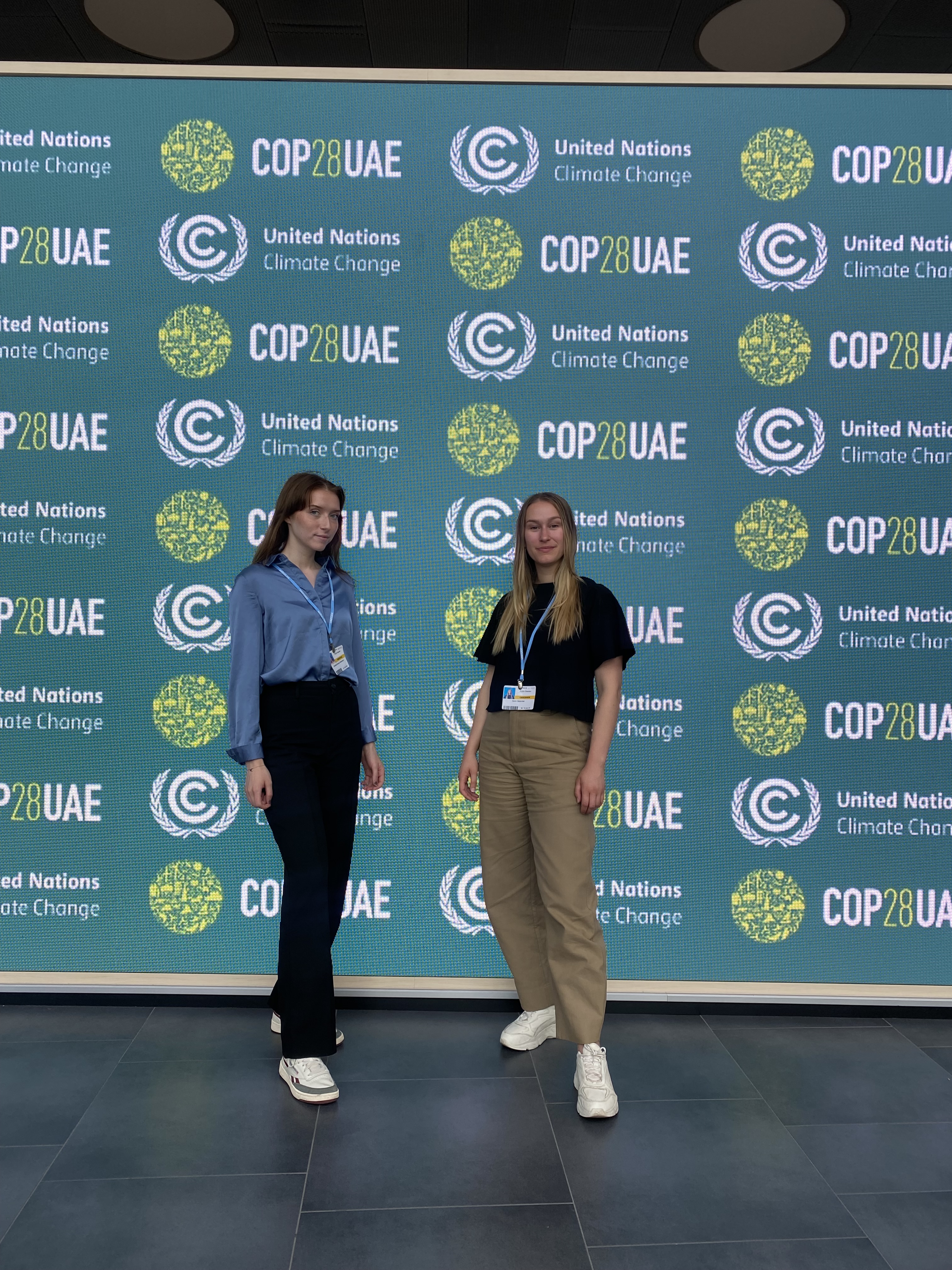
SB:s är förberedande möten inför COP och mer tekniska än politiska jämfört med COP-möten – det är inte så många politiker eller media här. Dock är sessionerna väldigt viktiga för att få ut så mycket som möjligt av COP-mötena.
Flera stora teman diskuterades i år. Jag har mest följt förhandlingarna kring Global Stocktake (GST) och lite kring utsläppsminskningar och Mitigation Work Programme. Andra viktiga ämnen som den nya fonden för skador och förluster (loss and damage fund), det nya finansieringsmålet (NCQG – New Collective Quantified Goal on Climate Finance), anpassning (adaptation) och operationaliseringen av the Global Goal on Adaptation, samt rättvis omställning har tagit stor plats. För mer information om Global Stocktake-förhandlingarna kommer ett separat blogginlägg kring detta inom kommande dagar!
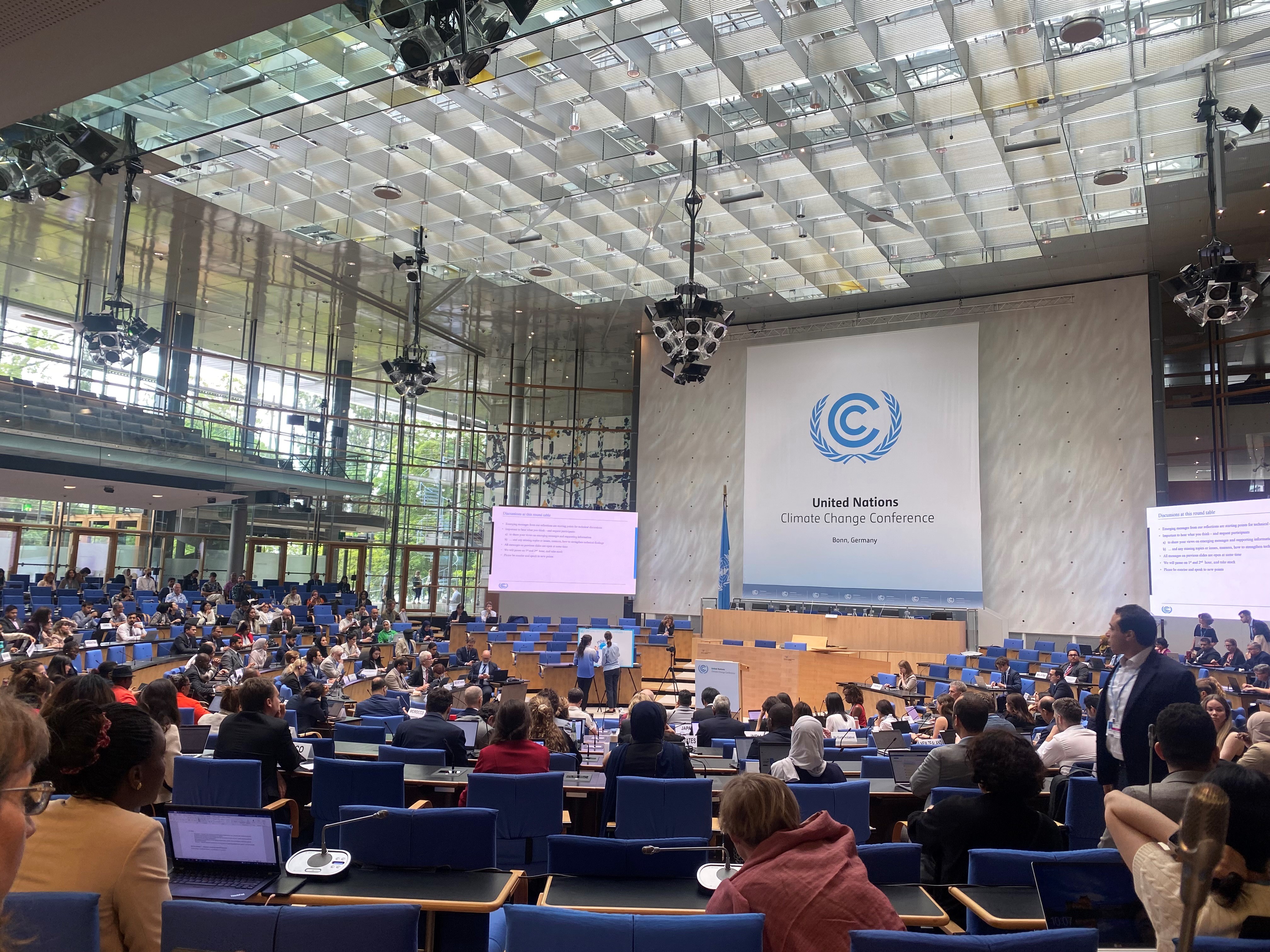
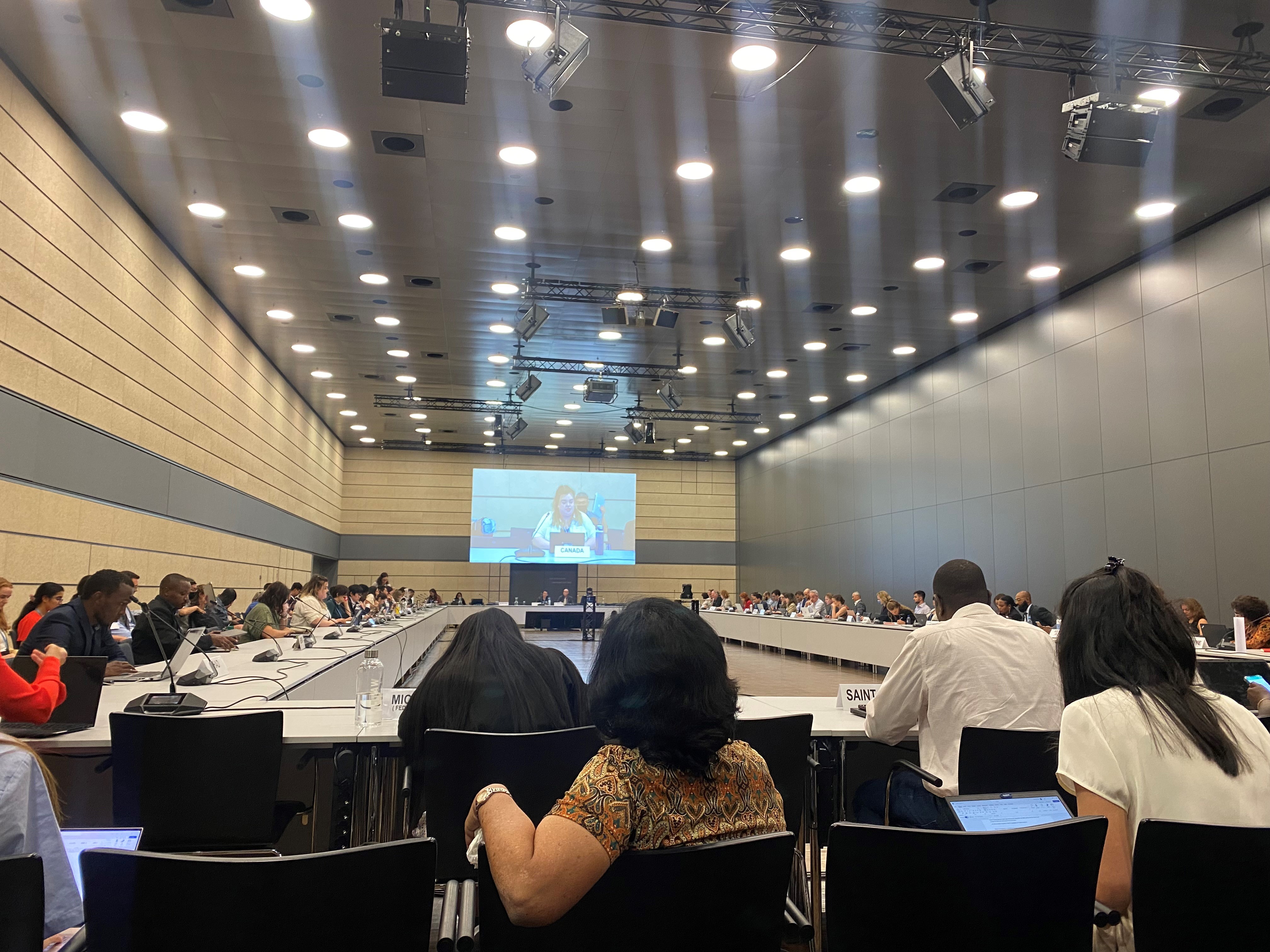
Något som dock tagit mycket plats i Bonn har varit den s.k. ”agendastriden”. På konferensens första dag den 5 juni skulle agendan för Bonn-mötet antas – men gjorde det först den 14 juni, på konferensens näst sista dag. Anledningen var oenigheter kring två agendapunkter: Mitigation Work Programme (MWP), ett program antaget på COP27 för att snabba på arbetet med utsläppsminskningar, och en punkt om finansiering, för att snabbt skala upp finansieringen från utvecklade länder.
MWP-punkten föreslogs att inkluderas i agendan av EU i mars, och finansieringspunkten lades fram av partigruppen LMDC (Like-Minded Developing Countries – runt 20 länder inklusive Bolivia, Ecuador, Indien, Saudiarabien, Kina och Bangladesh) under konferensen. LMDC-gruppen, med stöd från ett antal andra utvecklingsländer, ville inte ha med MWP på agendan om inte finansieringspunkten fanns med. De argumenterade för behovet av finansiering för att åstadkomma utsläppsminskningar, samt uttryckte besvikelse över att utvecklade länder inte levererat på sina finansieringsmål till utvecklingsländer. EU ville enbart ha med MWP, med motiveringen att finansiering redan diskuteras inom MWP och andra agendapunkter. Inkluderandet av MWP stöttades av andra utvecklade länder samt ett antal utvecklingsländer. Det slutade med kompromiss – varken MWP eller finansiering togs med i agendan. Däremot pågick förhandlingarna om MWP ändå, vilket skapade en märklig stämning på mötena när vissa delegater började sina anföranden med att påpeka osäkerheten kring MWP-diskussionerna då agendan ännu inte var antagen.
En av mina stora lärdomar från SB58 är därmed att sådant som man tror är småsaker är enormt viktiga i dessa sammanhang. Och trots att SB:s är mest av teknisk karaktär syns ändå en hel del politik.
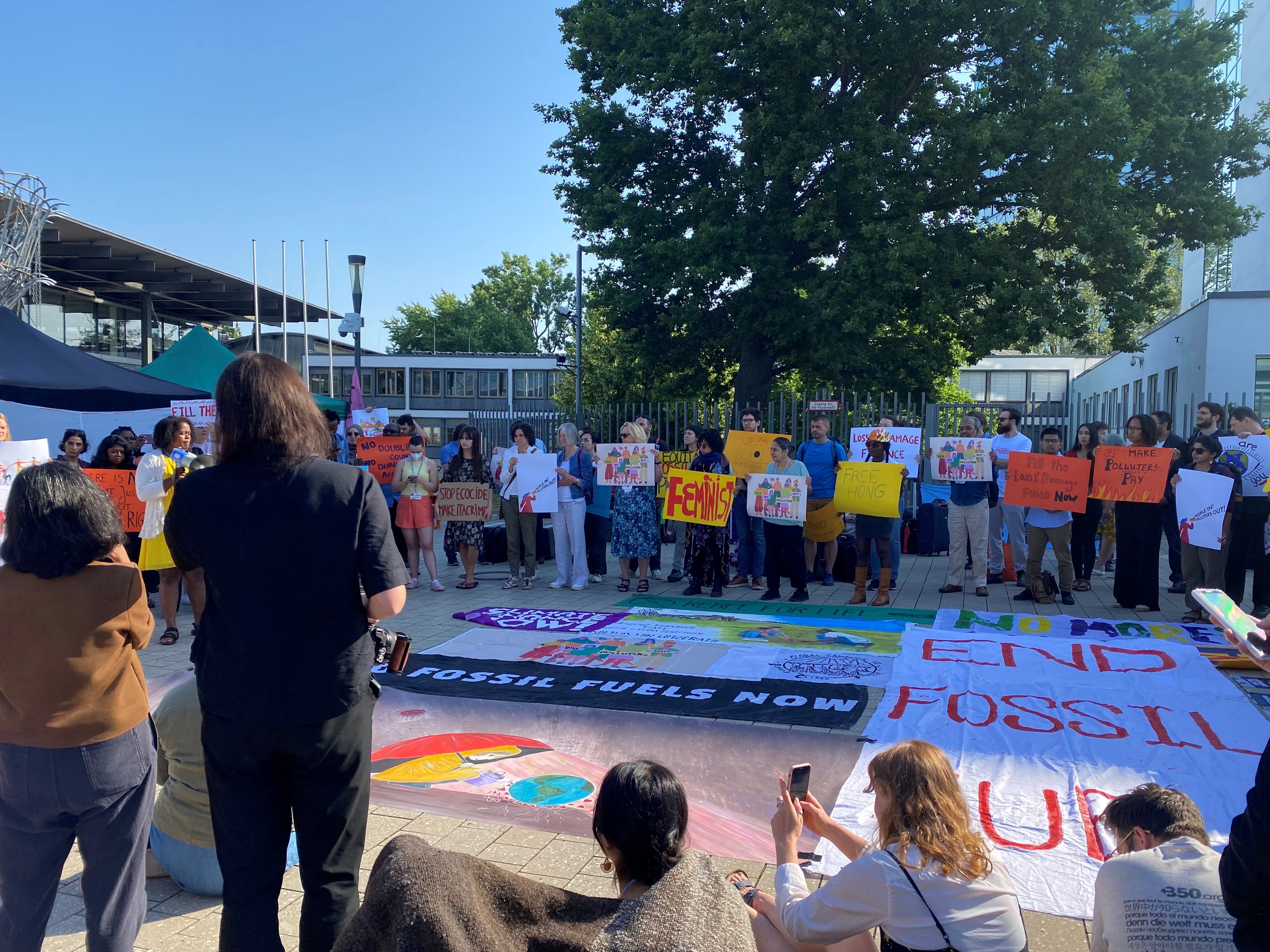
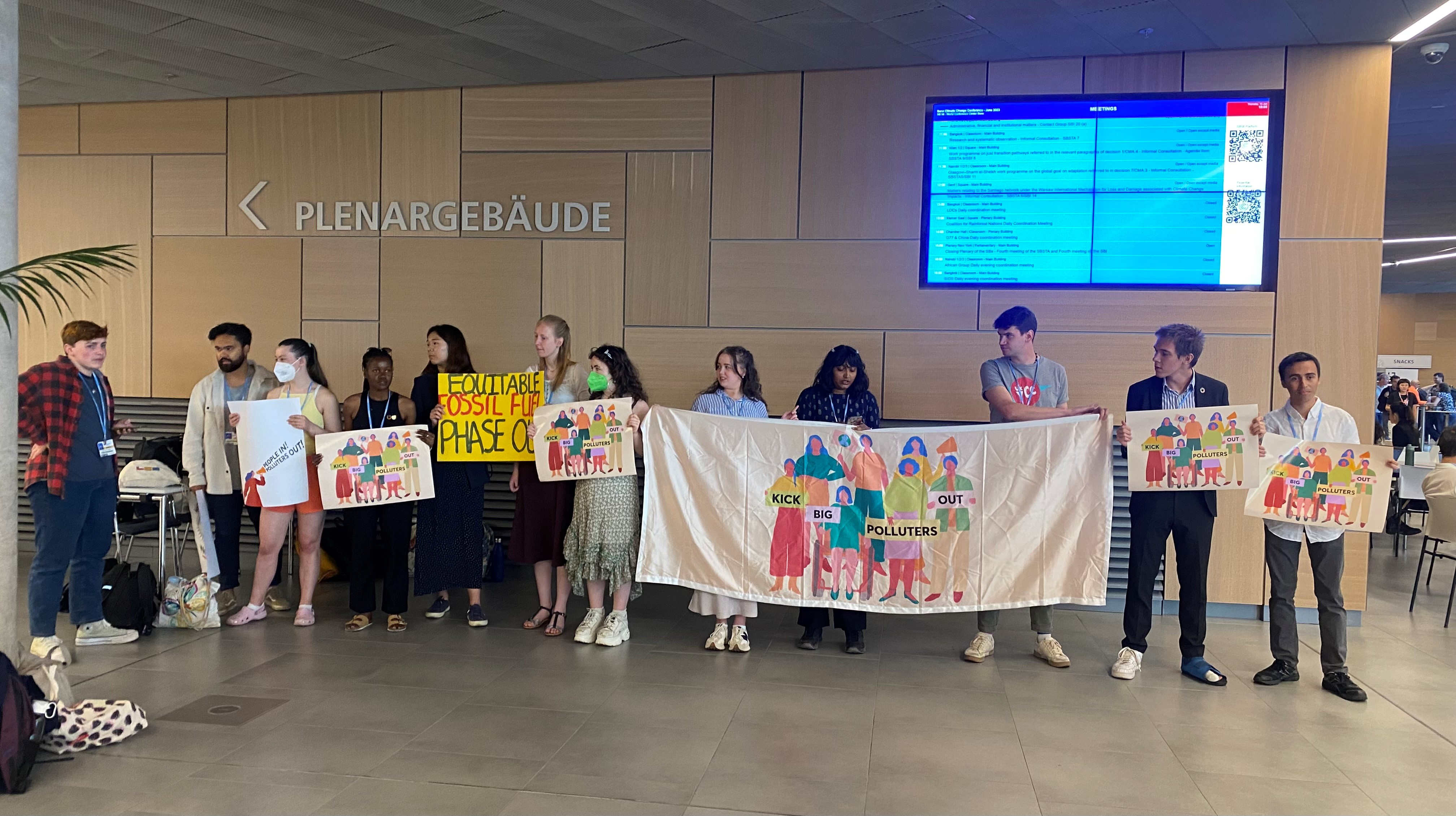
På SB:s sker dock inte bara förhandlingar, möten och sidoevent, utan civilsamhället gör sin röst hörd för att pusha politiken i mer ambitiös riktning. Olika aktioner pushade bl.a. för en snabb och rättvis utfasning av fossila bränslen, finansiering för skador och förluster, och vikten av ”mitigation work programme”. Flertalet aktioner kritiserade det stora antalet observatörer från fossilbranschen och den negativa påverkan dessa riskerar att ha på klimatförhandlingarna. Intressant är att UNFCCC:s sekretariat har börjat diskutera hur ackrediteringsprocessen kan göras mer transparent och anta tydligare riktlinjer för att undvika sådana intressekonflikter.
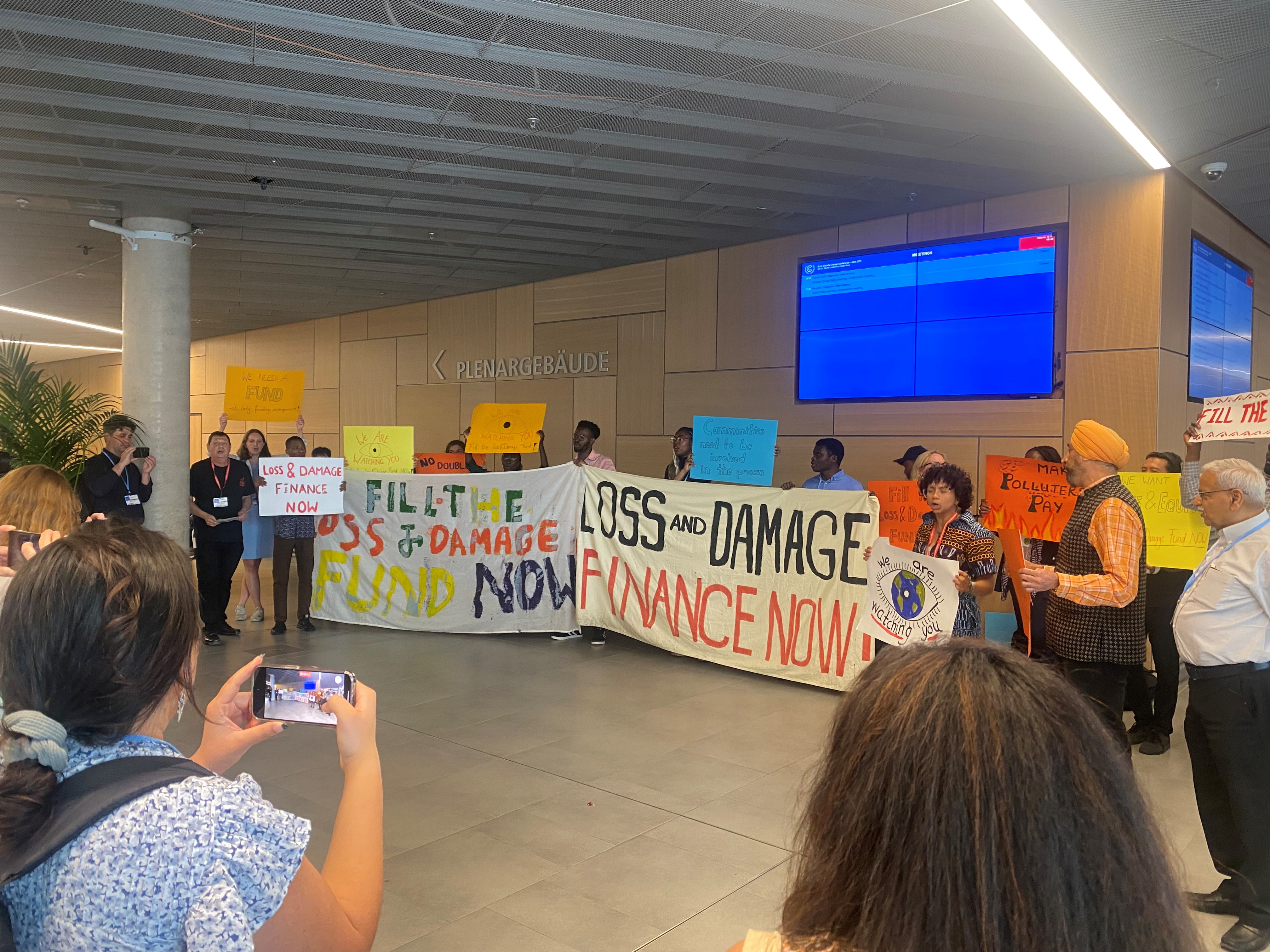
Ämnet ”intressekonflikt” var ständigt närvarande även av en annan anledning – Saudiarabiens ordförandeskap för COP28 och valet av Sultan Al Jaber, chef för landets statliga oljebolag, som COP-ordförande. Vad kommer detta innebära för möjligheterna till att diskutera en snabb, rättvis utfasning av fossila bränslen? Fortsättningsvis talade presidentskapet varmt under konferensen om inkluderingen av unga. Satsningen på ett program för 100 ungdomsdelegater utvalda från hela världen, med fokus på områden i minst utvecklade länder och ö-nationer, är positiv. Däremot var interaktionen med unga under konferensen tveksam – till eventet ”youth stocktake” till exempel var presidentskapet en halvtimme sen, och unga fick väldigt lite tid till att framföra sina åsikter.
Vår interaktion med andra unga på konferensen var däremot inte bristfällig! Att lära känna nya unga aktiva från andra länder var höjdpunkten under konferensen och är vad som ger oss styrka att fortsätta pusha för mer ambitiös och rättvis klimatpolitik.
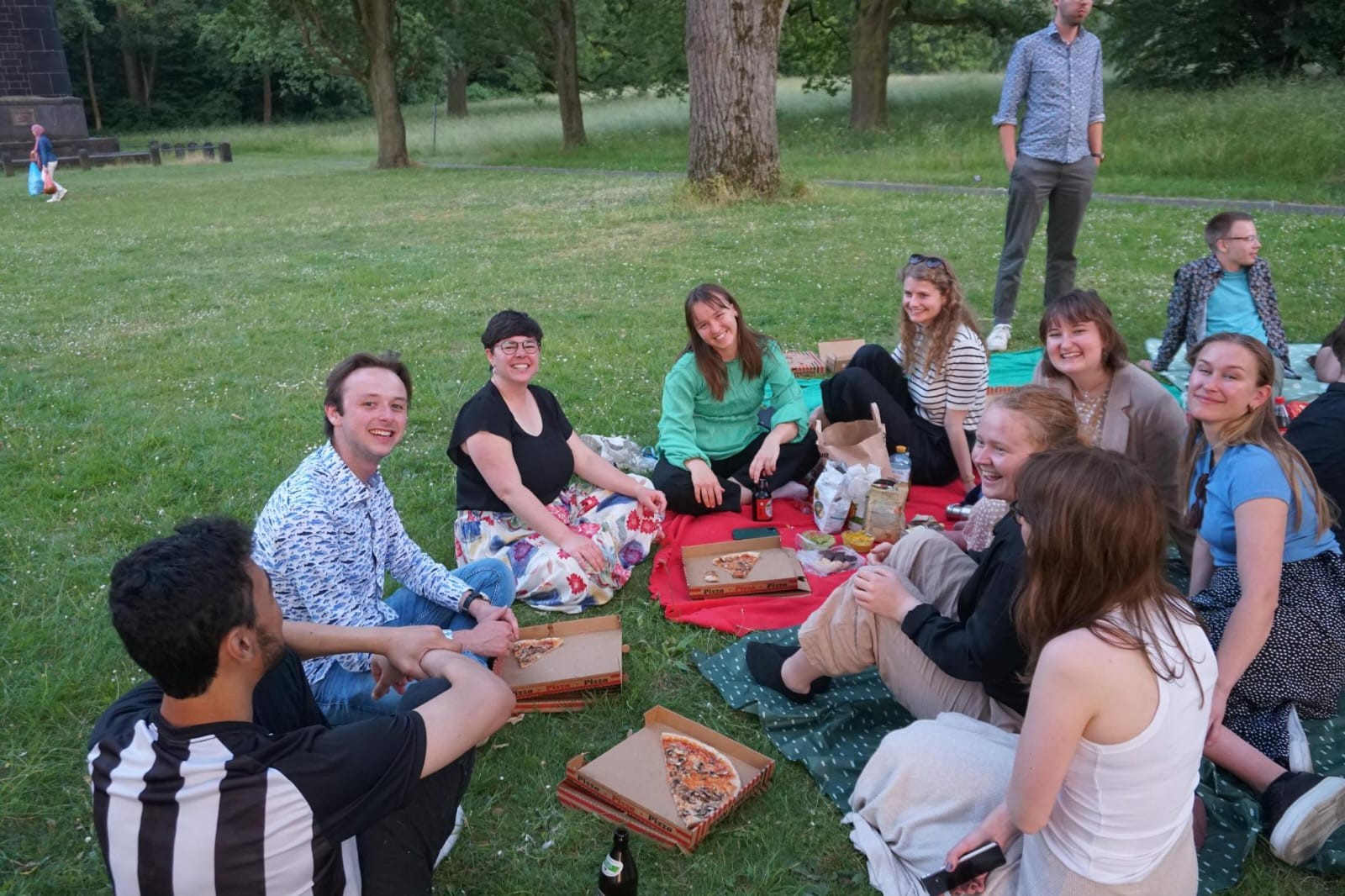
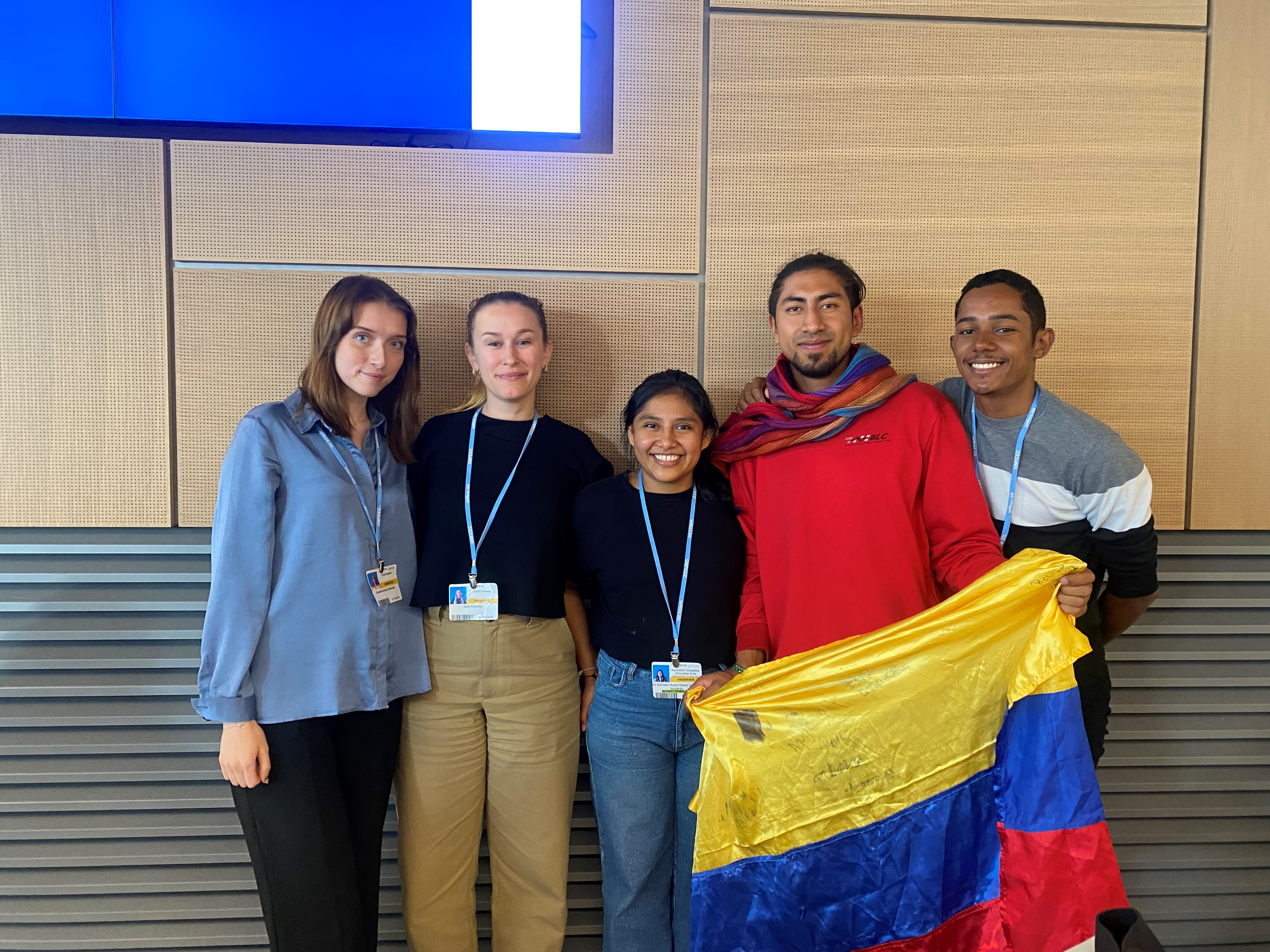
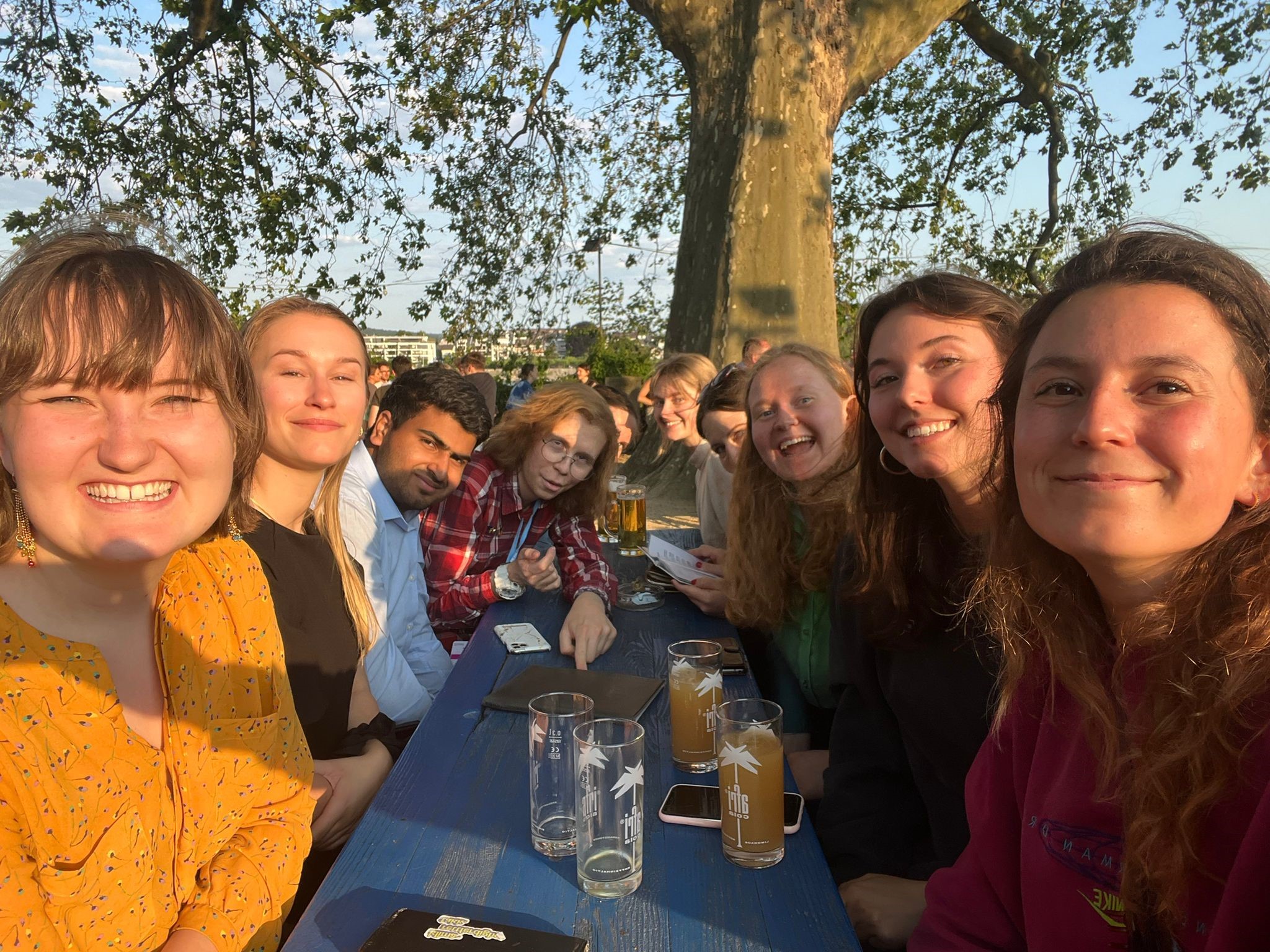
Vila och återhämtning efter Bonn är minst sagt välbehövlig, men vi är också än mer motiverade att fortsätta följa vägen till COP28 och pusha för förändring.
Tack Bonn för denna gång!
/Sara och Daniella
Vill du också engagera dig i internationell klimatpolitik, eller veta mer om PUSH Sverige? Maila till sara.olander@pushsverige.se.
English version
PUSH at SB58 in Bonn
By: Sara Ölander
Hello! PUSH Sweden has been in Bonn at the SB58 conference and has now returned home to Sweden. I (Sara, international coordinator) was there both week one and two but was joined by our president Daniella during the second week. As this was our first SB session, a lot was new – but we have learned so much!
SBs are preparatory meetings for the COPs and more technical than political compared to COPs – there are not many politicians or media here. However, the sessions are very important to get the most out of the COP meetings.
Several major themes were discussed this year. I have mostly followed the negotiations around the Global Stocktake (GST) and a little about emission reductions and the Mitigation Work Programme. Other important topics such as the new loss and damage fund, the new funding goal (NCQG – New Collective Quantified Goal on Climate Finance), adaptation and the operationalization of the Global Goal on Adaptation, as well as fair transition have taken a prominent place. For more information about the Global Stocktake negotiations, there will be a separate blog post about this in the coming days!
However, something that has taken up a lot of space in Bonn has been the so-called ”agenda fight”. On the first day of the conference on June 5th, the agenda for the Bonn meeting was supposed to be adopted – but did so not until June 14th, the second last day of the conference. The reason was disagreement over two agenda items: the Mitigation Work Program (MWP), a program adopted at COP27 to speed up work on emission reductions, and an item on financing, to quickly scale up finance from developed countries.
The MWP item was suggested to be included in the agenda by the EU in March, and the finance item was put forward by the party group LMDC (Like-Minded Developing Countries – around 20 countries including Bolivia, Ecuador, India, Saudi Arabia, China and Bangladesh) during the conference. The LMDC group, supported by a number of other developing countries, did not want MWP on the agenda unless the finance item was included. They argued for the need for funding to achieve emission reductions, and expressed disappointment that developed countries have not delivered on their funding targets for developing countries. The EU only wanted to include the MWP, arguing that funding is already discussed within the MWP and other agenda items. The inclusion of the MWP was supported by other developed countries as well as a number of developing countries. It ended in compromise – neither the MWP nor the finance item was included in the agenda. However, the negotiations on the MWP continued anyway, which created a strange atmosphere at those meetings when some delegates began their speeches by pointing out the uncertainty surrounding the MWP discussions as the agenda had not yet been adopted.
One of my biggest lessons from SB58 is that what might be seen as mere details are hugely important in these contexts. And even though SB’s are mostly of technical nature, a lot of politics is still visible.
At SB’s, however, not only negotiations, meetings and side events take place, but civil society makes its voice heard to push politics in a more ambitious direction. Various actions pushed for a rapid and fair fossil fuel phase-out, funding for loss and damage, and the importance of the MWP, for example. Many actions criticised the large number of observers from the fossil fuel industry and the negative impact they risk having on the climate negotiations. Interestingly, the UNFCCC secretariat has begun to discuss how the accreditation process can be made more transparent and adopt clearer guidelines to avoid such conflicts of interest.
The topic of ”conflict of interest” was also constantly present for another reason – Saudi Arabia’s presidency of COP28 and the election of Sultan Al Jaber, head of the country’s state oil company, as COP president. What will this mean for the possibilities of discussing a quick, fair fossil fuel phase-out? Moreover, the presidency spoke warmly during the conference about the inclusion of young people. The initiative of a program for 100 youth delegates selected from all over the world, focusing on areas in least developed countries and small island states, is positive. However, the interaction with young people during the conference was questionable – for the ”youth stocktake” event for example, the presidency was half an hour late, and young people were given very little time to express their opinions.
However, our interaction with other young people at the conference was not lacking! Getting to know new young activists from other countries was the highlight of the conference and is what gives us strength to continue pushing for more ambitious and fair climate policy.
Rest and recovery after Bonn is much needed to say the least, but we are also even more motivated to continue following the path to COP28 and push for change.
Thanks Bonn for this time!
/Sara and Daniella
Do you also want to get involved in international climate policy, or find out more about PUSH Sweden? Send an email to sara.olander@pushsverige.se.
 PUSH Sweden • International Climate Action