
Författare: Sara Ölander
Global Stocktake (GST) är en av 2023:s stora ”happenings” inom FN:s klimatkonvention (UNFCCC), då den första GST-processen någonsin ska slutföras. Det ska fungera som en ”check-up” på hur det går för världens länder med klimat- och miljöambitioner. GST är dock inte endast en deskriptiv lägesuppdatering – vi vet redan att utvecklingen går åt helt fel håll – utan fastställer även vad som behöver göras för att ta oss framåt mot mer ambitiös klimatpolitik. Eller som Simon Stiell, UNFCCC’s executive secretary, beskrev det som: “a moment for course correction”.
GST-processen påbörjades 2021 och består av tre faser: “data collection”, “technical assessment”, och “consideration of inputs” (eller den “politiska” fasen). Den tekniska fasen avslutades nu i Bonn där det diskuterades vad som bör inkluderas i GST för att informera vad parter bör göra för att uppdatera och förbättra deras klimatambitioner. Ett antal rundabordssamtal ägde rum, centrerade kring utsläppsminskningar (mitigation), anpassning (adaptation) inklusive skador och förluster (loss and damage), implementering (”means of implementation”) och integrerade och holistiska strategier (”integrated and holistic approaches”).
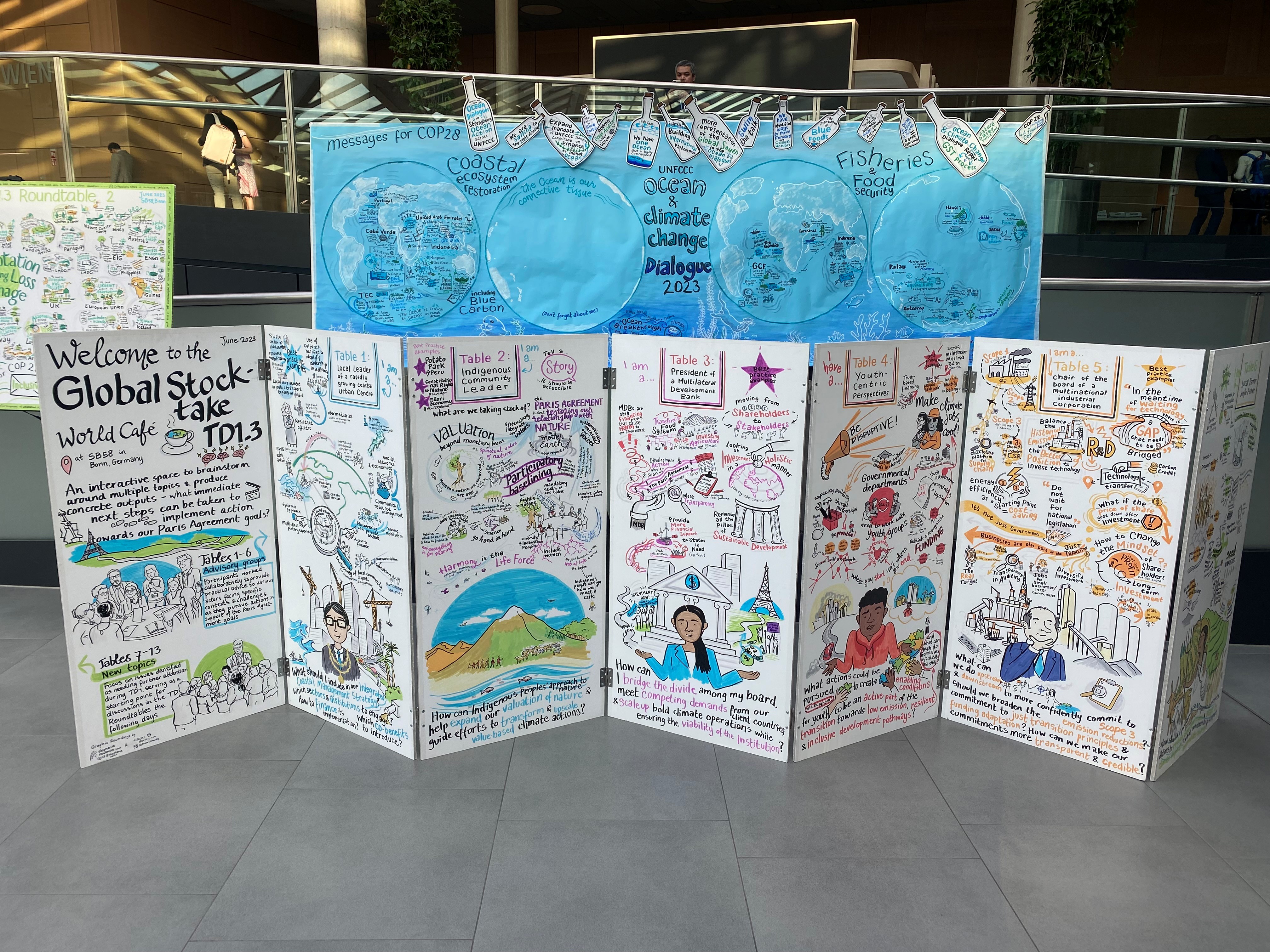
Bland många saker lyfte parter brådskan i att fasa ut fossila bränslen för att kunna uppnå 1,5-gradersmålet, utfasningen av fossila subventioner, investeringar i förnybar energi, och integrering av klimatmål med Agenda 2030-målen. Flera utvecklingsländer tryckte på behovet av utvecklade länders leverering av sina löften om klimatfinansiering, stöd i form av bidrag och inte lån för att inte driva på länders skuldsättning, ökningen av finansiering för anpassning och separat finansiering för skador och förluster. Vikten av tekniköverföring mellan länder, urfolks kunskap och inkludering, och koppling till biologisk mångfald var andra aspekter som lyftes.
Ett intressant återkommande tema i diskussionerna var hur mycket GST-dokumentet ska fokusera på “pre-2020” (skillnader i det historiska ansvaret som länder har för dagens utsläpp, där utvecklade länder släppt ut mest), eller om fokus mest ska vara på vägen framåt. Inte förvånande så argumenterade många utvecklingsländer för att både fokusera på det historiska ansvaret samt på lösningar framåt, medan flera utvecklade länder ville tona ned dåtiden och fokusera på framtiden.
Fortsättningsvis fanns stunder där länder, t.ex. USA och Saudiarabien, lyfte “framgångarna” världen hittills har nått och att utan åtgärder i samband med Parisavtalet hade uppvärmningen varit på ännu högre nivåer. Att tala om “framgångar” såg jag som otroligt provocerande då världen är långt ifrån att nå målen uppsatta i Parisavtalet, och utsläppen har fortsatt att öka senaste åren.
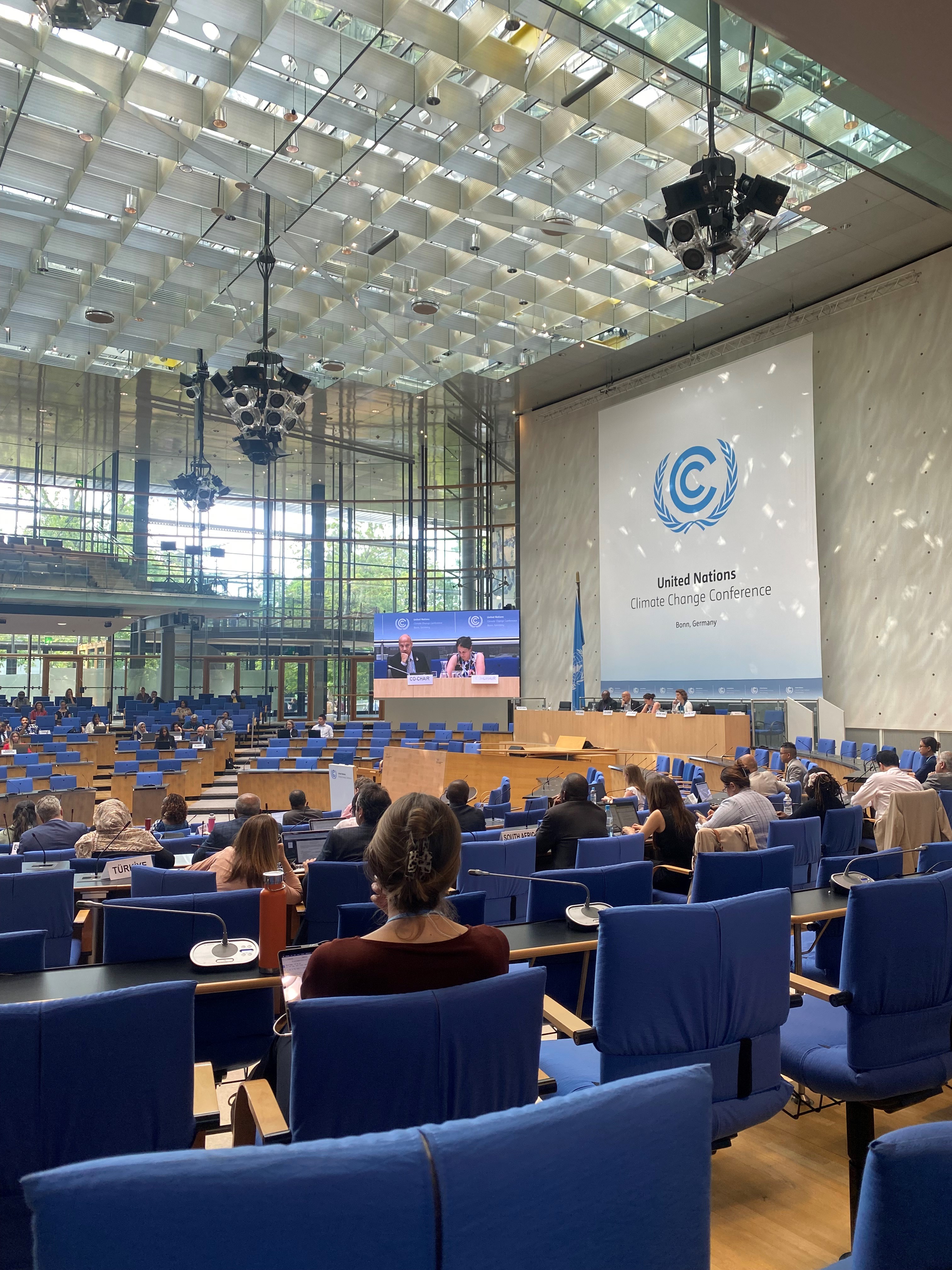
Samtidigt pågick förhandlingar där parter skulle komma överens om rubriker till utkastet för det slutgiltiga GST-dokumentet som ska fastställas på COP28. Jag trodde att detta skulle vara en icke-kontroversiell fråga – trots allt är det inte själva textinnehållet som ska debatteras – men där fick jag fel. Sista mötet på dag 9 av 10 var planerat för en timme, men blev över tre timmar långt och fick övergå i en kvällsession. Och ändå kunde parter inte enas! I utkastet togs det med fyra olika alternativ istället för ett enat förslag. Orsakerna var speciellt centrerade runt punkten om “purpose and goals of the Paris Agreement” och underkategorin “Finance flows and means of implementation and support”, där olika parter ville ha olika stark framtoning av dels “finance flows” och dels “means of implementation”.
Sammanfattningsvis: något som kan uppfattas som enbart detaljer kan ha en enorm innebörd för länder i sådana här sammanhang.
I september kommer en rapport från UNFCCC med en sammanfattning från diskussionerna, som utgör en bas för den sista och politiska fasen som påbörjas efter SB58 i Bonn och avslutas på COP28. Med tanke på att parterna i förhandlingar knappt kunde komma överens om vilka rubriker som ska ingå i det slutgiltiga GST-dokumentet blir det minst sagt intressant att följa diskussionerna under hösten…
English version
Global Stocktake at SB58
Author: Sara Ölander
Global Stocktake (GST) is one of 2023’s big ”happenings” within the UNFCCC, when the first ever GST process will be completed. It should function as a ”check-up” on how the world’s countries are doing on climate and environmental ambitions. However, GST is not only a descriptive status update – we already know that the development is going in the wrong direction – but also clearly states what needs to be done to move forward and stengthen ambition. Or as Simon Stiell, UNFCCC’s executive secretary, described it as: ”a moment for course correction”.
The GST process began in 2021 and consists of three phases: “data collection”, “technical assessment”, and “consideration of inputs” (or the “policy” phase). The technical phase was now concluded in Bonn where parties discussed what should be included in the GST to inform parties on how to update and improve their climate ambitions. A number of roundtable discussions took place, centered around mitigation, adaptation including loss and damage, means of implementation, and integrated and holistic approaches.
Among many things, parties highlighted the urgency of phasing out fossil fuels and fossil fuel subsidies in order to achieve the 1.5 degree target, investment in renewable energy, and the integration of climate goals with Agenda 2030 goals. Several developing countries pressed the need for developed countries to deliver on their climate finance pledges, support in the form of grants and not loans so as not to push countries into further indebtedness, the increase in funding for adaptation and separate funding for losses and damages. The importance of technology transfer between countries, indigenous knowledge and inclusion, and connection to biodiversity were other aspects highlighted.
An interesting recurring theme in the discussions was how much the GST document should focus on ”pre-2020” (differences in the historical responsibility that countries have for today’s emissions, with developed countries having emitted the most), or whether the focus should mostly be on the way forward. Not surprisingly, many developing countries argued for focusing both on historical responsibility and on solutions going forward, while several developed countries wanted to downplay the past and focus on the future.
Furthermore, there were moments where countries, e.g. The United States and Saudi Arabia, highlighted the ”progress” the world has achieved so far and that without measures put in place in connection to the Paris Agreement, global warming would have been at even higher levels. I saw it as incredibly provocative to talk about ”progress” when the world is far from reaching the goals set in the Paris Agreement, and emissions have continued to increase in recent years.
At the same time, negotiations were underway where parties would agree on headings for the final GST document. I thought this would be a non-controversial question – after all, the content of the text itself was not up for debate – but I was wrong. The last meeting on day 9 of 10 was scheduled for one hour, but ended up being over three hours long and had to be turned into an evening session. And yet, parties could not agree! In the draft, four different alternatives were included instead of a unified proposal. The reasons were especially centered around the point about ”purpose and goals of the Paris Agreement” and the subcategory ”finance flows and means of implementation and support”, where different parties wanted higher or lower emphasis of partly ”finance flows” and partly ”means of implementation” .
In conclusion: something that can be perceived as mere details can have a huge meaning for countries in these contexts.
In September, a report from the UNFCCC will summarize the discussions, which will form the basis for the final and political phase that will begin after SB58 in Bonn and conclude at COP28. Given that the parties in negotiations could barely agree on which headings to be included in the final GST document, it will be interesting to say the least to follow the discussions during the autumn…
 PUSH Sweden • International Climate Action